Monday, August 18, 2008

Karate - Unsolved (2000)

With a mixture of jazz-influenced fluidity and nearby noodling, Karate's fourth album delivers dramatic stop/start rock that ebbs and flows and is sparked, at its' best moments, by lost narratives and cutting guitar work. Occasionally it is only the crisp, billowy, unsteady patterns of drummer Gavin McCarthy that remind you that this is not a pop-fusion effort from the late '70s. The unsettling moments and the ever-present tension that make a band like June Of '44 take on the same territory more successfully are replaced by an over-reliance on technical proficiency and shifting time signatures.

Certainly there is some great interplay between the bassist and drummer, resulting in some truly solid rhythms and a pervading sense of anger pops up on "Sever" that attempts to pull the listener in. Throughout the record, Geoff Farina's lyrical asides manage to balance out the pretentious with the tossed-off. Although this release never finds the trio hitting the emotional heights they achieved on their first two albums, Karate and In Place Of Real Insight -- they've managed to expand the breadth of their sound as well as help set the bar a bit higher for musical proficiency in the realm of indie rock.

Rocket From The Tombs - The Day The Earth Met The Rocket From The Tombs (2002)

Rocket From the Tombs, the Cleveland band that featured a pre-Pere Ubu David Thomas and future members of the Dead Boys, has been hailed by numerous serious rock critics as overlooked punk and new wave forefathers. They never entered a recording studio, however, and for the most part their scant body of demos and live tapes have been heard only by serious collectors, though some were available on the 1990 album Life Stinks (itself hard to find now). The Day the Earth Met the Rocket From the Tombs does not issue every tape known to exist by the group, and is not perfect from the standpoints of fidelity and performance. The 74-minute disc does, however, finally make a reasonably comprehensive document of their work widely available for the first time. The first half is devoted to a February 1975 loft rehearsal, and though the sound is on the muddy side, the performances raw, and the songs on which David Thomas sings lead afflicted by some indistinct vocals, it's a quite powerful fusion of hard rock, metal, and art rock that in retrospect can be seen to contain some seeds of American punk. Particularly edgy are an early version of "30 Seconds Over Tokyo" (redone to famous effect by Pere Ubu) and the nearly out-of-control "Life Stinks," though the standout number is the unexpectedly melodic, lyrically desperate "Ain't It Fun." The next seven songs, from one of their final shows in July 1975, boast better (though not outstanding) fidelity, and some of their most innovative compositions ("Final Solution" and "Sonic Reducer"), as well as the arcane Velvet Underground cover "Foggy Notion" (at that time impossible to find even on bootleg). Thomas doesn't sing lead on any of the July 1975 numbers but does on all three of the final selections, taken from a May 1975 show, including the future Dead Boys staple "Down in Flames" (with a downright avant-garde instrumental section) and a cover of "Search & Destroy." There are shortcomings to Rocket From the Tombs: some of the songs leaned too heavily on heavy metal and simple outrage, and for all the notoriety attached to the band because of the Pere Ubu and Dead Boys connections, their best moments were actually the more sensitive reflections on troubled youth by Peter Laughner. And there are some imperfections to the package in that it doesn't include all the known Rocket From the Tombs tapes, the excerpts seemingly selected so as not to repeat any song twice (it's also unfortunate that the loft cover of the Rolling Stones' "Satisfaction" fades out almost as soon as it starts). Yet, in all, this is a release of considerable historical importance and definite musical worth, enhanced by lengthy and knowledgeable liner notes.

MF Doom - Operation Doomsday (1999)

Simultaneously hailed as an underground classic and cast aside as poorly produced backpack rap, Operation: Doomsday inaugurated the reign of MF Doom in underground rap from the early to mid-2000s. The pretext for the album is very similar to that of Marvel Comics supervillain Dr. Doom; after MF Doom, then known as Zevlove X, had been devastated by the death of his brother and K.M.D. accomplice, DJ Sub-Roc, in the early '90s, Elektra dropped his group and stopped the release of its second album, Black Bastards, due to its political message and, more specifically, its cover art. Doom was left scarred with a lingering pain that didn't manifest until the late '90s as hip-hop's only masked supervillain on Bobbito Garcia's Fondle 'Em Records. Carrying the weight of the past on his shoulders, Doom opens and closes Operation: Doomsday with frank and sincere lyrics. In between, however, many of the villain's rhymes are rather hard and piercing. On his subsequent material, he developed a more steady and refined delivery, but on this debut, Doom was at his rawest and, lyrically, most dexterous. The out-of-left-field edge of Doom's production -- which features '80s soul and smooth jazz mixed with classic drum breaks -- is indeed abstract at times, but his off-kilter rhymes are palatable and absent any pretentiousness. In fact, the album arguably contains some of the freshest rhymes one might have heard around the time of its release. There are more than enough obscure but fun references (i.e. "quick to whip up a script like Rod Serling" on "Go with the Flow" or "MCs, ya style needs Velamints" on "Dead Bent") and quotable jewels from the "on-the-mike Rain Man" to feed on. Nevertheless, one would be hard-pressed to overlook the low-budget mixing that mars some of the LP's presentation. For the hardcore Doom fans, the recorded-in-the-basement quality is appealing and representative of his persona as the underdog who "came to destroy rap." In contrast, given his contributions to hip-hop during the 2000s, the masked villain offers this explanation on "Doomsday": "Definition: supervillain/A killer who loves children/One who is well-skilled in destruction as well as buildin'." Even though this album is certainly not for everyone, you can easily respect from where the man is coming.

Friday, August 15, 2008

Dead Moon - Thirteen Off My Hook (1990) & Crack In The System (1994)


In December of 2006 an era ended. After 20 years of playing practically the same three songs in hundreds of variations, Fred Cole's Dead Moon called it quits. During this time they've been the poster boys for how a garage band should be like - straightforward, approachable, and fueled with conviction - demonstrating that you can just live your dream as long as you don't give a rat's ass about anything else. As a result they've slowly built a devoted following (mostly in Europe - even mild success deluded them in the States, despite playing every festival they could find in their home state of Oregon), who go as far as tattoing the Dead Moon logo on various body parts.


In this time, Dead Moon played countless gigs, but managed to put out a respectable amount of LPs as well, all on their own Tombstone label, all sounding like they've been recorded in a garage, all originally available on Vinyl only, all of them in MONO (hey!), and most featuring black-and-white album covers that looked like posters of 60s B-movies. If this isn't garage, you tell me what is.

Thirteen Off My Hook is from 1990 and includes my favorite Dead Moon song, D.O.A., while Crack in the System is the overall better album (and doesn't sound as muffled). After their hiatus, Sub Pop compiled a neat box set (letting Fred Cole pick his favorite songs), called Echoes of the Past. It features 49 songs and would be a bit too large to post here, but any Dead Moon fan should own this.

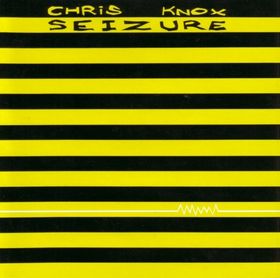
Chris Knox - Seizure (1990)


For the uninitiated, Chris Knox is one half of the Tall Dwarfs, the New-Zealand band who pretty much defined Lo-Fi music in the 80s. Seizure wasn't his first solo album, but you could call it his first "proper" solo album. Where "Songs for cleaning guppies" was a sonic mess, Seizure is a pop gem. It sounds a lot like a Tall Dwarfs album, but is more upbeat and lyrics-centered. The tape loops and odd sound effects are still there, but they don't define the songs as much as they do in Tall Dwarfs albums of that era. This one features his probably best known song, "Not Given Lightly", which climbed the NZ charts and made a lot of people wonder about Knox' sexual orientation for the first time (the track "The Woman Inside of Me" probably contributed to this).


1 The Face of Fashion
2 The Woman Inside of Me
3 Statement of Intent
4 Filling Me
5 Not Given Lightly
6 Break!
7 Uncle Tom's Cabin
8 Wanna!!
9 And I Will Cry
10 Rapist
11 Grand Mal
12 Voyeur
13 Honesty's Not Enough
14 My Dumb Luck
15 Ache

Thursday, August 14, 2008

Bongwater - The Big Sell Out (1991)


What turned out to be Bongwater's last album before the acrimonious end of the personal and professional Magnuson/Kramer partnership was a sellout only in the sense of the slick cover art and presentation, tongues firmly in cheek. Otherwise, the blend of folk, shadowy psych weirdness, and satiric spoken word and lyrical jabs against the state of the world, specifically America, run as rampant as always. Rick was replaced on second guitar by Raymond Hudson, but this made little general difference to Bongwater's overall approach and Kramer's distinct production style. The title track is one of their best, some lovely guitar drones and singing bringing out the weird, gentle melancholy of the song. Magnuson as always has a great time with her inspired monologues. "What's Big in England Now?" has her in sassy Noo Yawk voice talking about everything from pudgy editors at Rolling Stone to Lenny Kravitz talking about mushy peas. "Celebrity Compass" is even sharper, her depiction of a teenager at a Led Zeppelin party wondering, "Which one will take me away to live with him in his castle in England?," at once hilarious and just a little unsettling. Kramer's hero rock guitar in the background makes all the more sense. There are a couple of interesting deviations from the norm: "Free Love Messes Up My Life" keeps the duet singing prominent throughout, but the arrangement and general groove is very '60s/easy listening, some years before the big cult hype for that sound kicked in. "Flop Sweats," meanwhile, transforms Bongwater into a heavy blues/hard rock group, at least up until Magnuson starts talking about a performance artist who has merchandised and licensed her name with frightening efficiency. A lovely cover of Fred Neil's "Everybody's Talking," with additional ruminations from Magnuson, concludes this intriguing album. AMG

Wednesday, August 13, 2008

Bongwater - The Power of Pussy (1991)


As much a performance art troupe as a band, Bongwater was the brainchild of guitarist (Mark) Kramer -- chief of the Shimmy-Disc label and a former member of Shockabilly -- and actress Ann Magnuson, best known to mainstream audiences for her role in the ABC sitcom Anything But Love as well as the feature film Making Mr. Right. Kramer and Magnuson first met at her downtown New York nightspot Club 57, where he engineered the sound for her performances with the all-female percussion group Pulsalamma; after forming Bongwater in 1985, the duo enlisted avant-garde guitarist Fred Frith to record their 1987 EP debut Breaking No New Ground, a crazed neo-psychedelic set typified by Magnuson's surreal narratives, often inspired by her dreams about major celebrities and fellow downtown NYC denizens.

Kicking off with the great title track, a slow-chugging anthem with a sharp Magnuson lead and lyric, along with guest vocals from none other than the B-52s' Fred Schneider, Pussy pumps up Magnuson's vicious, intelligent feminism to an even higher level than before. From the barbed "What If..." and "Women Tied Up in Knots" to her incredible spoken word "What Kind of Man Reads Playboy" and more, she's on a very artistic rampage. Style, performance, sass, and rage combine brilliantly throughout. In general, Bongwater, with Licht back on drums in place of Sleep's rhythm boxes, continue as before, incorporating a more creepy sweetness at points. "Great Radio" is a standout, the group performing a slow, drony, and druggy piece with gentle power, while other songs like "I Need a New Tape" mix up the zoned psychedelic hush of past albums once again. Covers again crop up, both quite striking. The Weavers' folk standard "Kisses Sweeter Than Wine" gets a lovely, haunting take, with guest banjo from roots music legend Peter Stampfel, while Dudley Moore's hilariously dismissive "Bedazzled," from the mid-'60s film of the same name, is tailor-made for a crackerjack Magnuson spotlight vocal. Throughout Pussy, pop culture is roasted over a slow fire in a multitude of ways. "Nick Cave Dolls," besides concluding with Magnuson's breathy, delicious whine about wanting one of said items, slips in everything from references to Hollywood and Dorothy Stratten to some of the notorious profane tapes of Buddy Rich abusing his band. The absolute hands-down winner comes right at the end, the lengthy "Folk Song." Tackling everything from wannabe rebels to corporate and political idiocy from the top on down -- not to mention a ripping dissection of then-recent hit-movie Pretty Woman that spares absolutely nobody -- Magnuson is in excelsis throughout. AMG

Alan Vega - self-titled (1981)


Alan Vega used his first solo album to distance himself from the music made by his pioneering synth-punk duo Suicide. Where Suicide deliberately used cheap, loud synthesizers to generate a cold, crude sound, Vega hired a guitarist and made, for all intents and purposes, a rockabilly album. "Lonely" is Vega's homage to "Heartbreak Hotel," and it's as full of yelps and pleading as the original, as Vega does his best Elvis impression. The gorgeous "Ice Drummer" may be Vega's best solo track, a beautiful shiny pop gem. Only "Bye Bye Bayou," a misguided attempt to fuse '50s rock and Vega's extended performance art pieces, falls flat. Still, golden pop moments like "Ice Drummer" are good reminders of why Vega, for all his eccentricities, remains a musician worth caring about. AMG

1 Jukebox Babe 4:49
2 Fireball 3:55
3 Kung Foo Cowboy 3:25
4 Love Cry 4:48
5 Speedway 2:32
6 Ice Drummer 4:26
7 Bye Bye Bayou 8:40
8 Lonely 2:45

Trans Am - Trans Am (1996)


Trans Am is a three-piece band that performs a mix of synth pop and rock music. Their work treads a fine line between spoof and homage, mainly centering on a cerebrally robotic, semi-danceable, minimalistic format, reminiscent of 1980s video game soundtrack music. They are known for constant touring (with bands such as Tortoise, Pan Sonic, The Fucking Champs, The Bronx, Tool, etc.), cryptic album artwork, and continual thematic re-invention. All of their albums have been released on the Chicago-based independent record label, Thrill Jockey.

Tuesday, August 12, 2008

The United States of America - self-titled (Reissue) (1968)


Fueled by the avant-garde sonic ammo of keyboardist/composer Joe Byrd and the haunting vocals of Dorothy Moskowitz, the United States Of America found a way to permanently hardwire space-age electronic music to the heart of rock and roll on their highly desirable, self-titled 1968 debut. Byrd’s kaleidoscopic musical excursions and Gordon Marron’s searing violin orbit around the icy vocals of Moskowitz, who—with a passing resemblance to early Jefferson Airplane belter Signe Anderson—remains the group’s center, steady as a rock. This heady mind-trip has been reissued on Sundazed Records with the participation of both Byrd and Moskowitz, sports 10 amazing bonus cuts, comprehensively fascinating liner notes by Byrd, himself, and—newly mastered from the original analog source tapes—has never sounded better.

1. The American Metaphysical Circus
2. Hard Coming Love
3. Cloud Song
4. The Garden Of Earthly Delights
5. I Won’t Leave My Wooden-Wife For You, Sugar
6. Where Is Yesterday
7. Coming Down
8. Love Song For The Dead Ché
9. Stranded In Time
10. The American Way Of Love
BONUS TRACKS
11. Osamu's Birthday *
12. No Love To Give *
13. I Won't Leave My Wooden Wife For You, Sugar [alternate version] *
14. You Can't Ever Come Down *
15. Perry Pier *
16. Tailor Man [demo recording] *
17. Do You Follow Me *
18. The American Metaphysical Circus [Columbia Records audition recording] *
19. Mouse (The Garden Of Earthly Delights) [Columbia Records audition recording] *
20. Heresy (Coming Down) [Columbia Records audition recording] *
*previously unissued